
Use EMV To Sell Higher Margin Solutions
By The Business Solutions Network
This VAR looks at EMV (Europay, MasterCard, and Visa) terminal upgrades as a way to endear customers and move into conversations around high-margin solutions.
Like every other credit card-accepting merchant in the United States, City Gear, a retailer of urban wear with 120 stores based in Memphis, TN, found itself facing the EMV liability shift of October 2015. However, unlike many retailers, City Gear’s leadership didn’t take a passive position on EMV, didn’t drag its feet, and didn’t wait to see if the shift would get pushed out to a later date. Rather, the retailer sought to do everything it could to address EMV by the shift date. Thus, its management reached out to VAR/integrator Retail Information Systems (RIS) for help.
 RIS came to work with City Gear a few years ago, when City Gear acquired another retail chain. Upon closing the acquisition, City Gear recognized that the Retail Pro software being used by the chain it acquired was better than what City Gear itself was using. The VAR that sold and supported the software was RIS, which got the call to convert all of City Gear’s stores to Retail Pro. In the time since, RIS has become the go-to technology partner for City Gear. It made sense then, that when EMV came around, the retailer would turn to RIS for help updating its credit card processing, chain-wide.
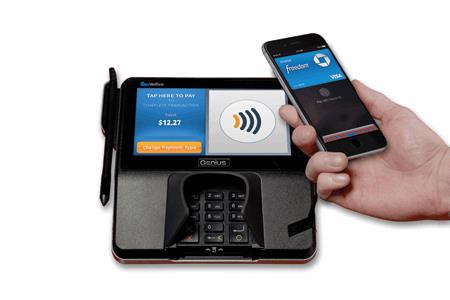
Madhu Bontha, CEO of Retail Information Systems, says the chain had different payment systems depending on the stores. “Some stores had integrated processing, while others did not,” he says. “Regardless, they were faced with upcoming EMV standards as well as meeting existing PCI requirements.” To meet these needs, RIS recommended the Genius platform by Cayan. “The Genius we recommended runs on a Verifone MX915, providing next generation payment features like EMV to merchants,” he says. “Additionally, by using the Genius platform, City Gear is removed from the scope of PCI PA-DSS — there is no credit card data exchanged between Retail Pro software and the payment terminal.”
RIS rolled out a pilot to five City Gear stores. Over the course of two weeks, the VAR and City Gear studied the Genius system to ensure transactions were being processed correctly and the desired functionality was adequate. After the two weeks, City Gear was sold on the idea and a full rollout began. At the time, the retail chain had approximately 100 stores. The companies worked to update four or five locations every few days. Most locations have two Genius terminals.
Not only do the terminals address EMV-enabled payments for City Gear, but the Genius platform is also compatible with other upcoming payment types such as NFC and Apple Pay. “Cayan built Genius so terminals could be updated with new functionality while in the stores,” says Bontha. “This future-proofs the investment for our customers. If new payment platforms or functionality comes to market, it can be added as soon as it’s available and pushed out remotely. For instance, the day Apple Pay was announced, the Genius terminals at City Gear were capable of accepting payments without us or City Gear taking any action.”
Another aspect of Genius that pleasantly surprised the merchant was the speed of EMV transactions. “Many people know that EMV transactions typically take a lot longer than a swipe,” says Bontha. “Cayan developed its own kernel which re-engineers the authorization process and takes transactions down to under 4 seconds.” The company calls this technology ChipIQ.
The purchase of the Genius terminals was via a Hardware-as-a-service (HaaS) contract through Cayan itself. Bontha says the margin for the terminals isn’t high enough to warrant the sale going through RIS. With the current arrangement, if any issues occur with the terminals, Cayan will support them, even sending new units overnight if necessary. Additionally, he says the HaaS model is appealing to many retailers today who prefer OPEX purchases to CAPEX.
Today, City Gear has 120 stores, all running Genius terminals and meeting the requirements of EMV. As the chain expands, terminals are added where needed.
Wisely, Bontha isn’t heart-broken over a missed revenue opportunity from the terminals. Rather, he looks at EMV upgrades as a way to better serve his customers, keep them satisfied, and act as a trusted adviser. By nurturing a healthy relationship, RIS has the ability to then recommend and sell additional higher margin solutions, such as video analytics for people counting and demographic studies, RFID item-level tagging for real-time inventory, and systems that deliver omnichannel capabilities. For him, EMV upgrades are a way to keep the conversation going and move on to additional value-added services.