
Advice For Expanding To Japan – Part 1
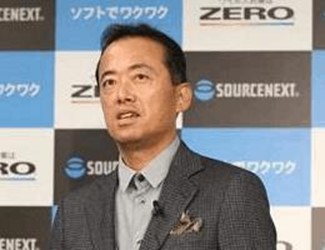
Building on over 20 years of software publishing experience in Japan, SOURCENEXT works with companies based in the U.S. and other countries to bring their successful desktop software and mobile apps to Japanese audiences. Founder, CEO, and President Noriyuki Matsuda know what it takes to develop talent at software companies in foreign markets. In this two part series with ISVinsights and Software Executive, Matsuda shares his expertise on differences between attracting and hiring employees in the United States and foreign markets, including recruiting, training, onboarding, and finding cultural fits.
---
In your opinion, what are the biggest differences between attracting and hiring employees in the United States and Japan?
I think that one of the big differences in attracting new employees in Japan compared to the U.S. is that in the U.S. there are employee benefits such as stock options that are not as common yet in Japan.
It’s crucial for U.S. companies looking to hire someone in a foreign market to do their homework upfront and be fully aware of all the nuances in that region. A U.S. company who finds a candidate in Japan who is bilingual (which is rare) and has worked with other U.S. companies in the past may think they have struck gold. But, just because a candidate is capable of speaking English and Japanese does not mean they are capable of doing business. I have seen companies fail to find the right people many, many times in Japan. But once you do find that truly golden foreign candidate that has proven performance and fits the culture, then it’s time to construct an attractive offer which factors in all the nuances of the local region. Some differentiators include:
- Food:
- Many large companies in Japan have restaurants/cafeterias on the company property. The costs employees pay for food is very low. This is considered a fair model in Japan.
- Whereas in the U.S., many companies (especially in the Silicon Valley) offer a free meal plans. There are a few larger companies in Japan which offer free meal plans (in reaction to the U.S.). These include companies such as Google, Rakuten & Softbank.
- Overall, the feeling in Japan is that free meal plans are not fair to all employees – for example, sales staff who are often out of the office cannot take advantage of the perk.
- Stock Options:
- Most U.S. companies offer stock options to their employees.
- Most Japanese companies do not, although some U.S. companies with a division in Japan do offer stock options of their U.S. stock to their Japan employees.
- Health Insurance:
- In the U.S., most high-tech companies offer insurance to be competitive. But the amount of funding from the employer can differ significantly. Some employees could have no out of pocket expenses, whereas others could have large out of pocket expenses for insurance dues.
- In Japan, there is not much difference between health insurance plans.
- Salary:
- Usually U.S. companies looking to hire Japanese staff pay a higher wage than most Japanese based companies (but the U.S. company does less training than a Janpanese company would).
What are the four most important factors hiring managers need to consider when recruiting for and selecting candidates in Japan?
We look not only at a candidate’s skills and experiences, but also place emphasis on whether or not the candidate understands and would uphold the company’s culture/policies, and whether or not they would “fit in” with our company. We also take into consideration if the candidate seems to be willing to work long-term (i.e. won’t move on after a few months), if the candidate places goals not only on personal achievements, but also has a strong desire to contribute to the company, and if the candidate is cooperative and has an open mind. Some examples:
- Hierarchy:
- In Japan, the majority of companies have a rigid hierarchy system. Basically, the more senior (older) an employee is, the higher up in the company they are. Sourcenext operates differently and tries to break down the hierarchy. Sourcenext focuses more on employee performance metrics for growth opportunities within the company.
- One aspect of hierarchy in Japan is that there are so many different ways of expression in Japan depending on what level of hierarchy is talking to another level – from rude to polite.
- In Japan, people quickly ask/learn other people’s ages. This is important to know to properly address them (either as a senior/junior). Sourcenext is breaking this down as well and only permits a method of discussions on a similar level.
- Another aspect of hierarchy is that in the U.S., decisions are made quickly. Decision authority is given to lower levels. In Japan, most decisions are made during meetings, thus it takes a long time for decisions to be made.
- Work Goals:
- In the U.S., employees are measured on accomplishments (performance oriented), not necessarily how you get there. In Japan, it’s more process oriented. Employees feel guilty leaving early, thus end up staying late.
- Even if employees did not ultimately meet the goal (let’s say landing a deal), the employees don’t feel bad if they put a lot of effort into the project. This doesn’t apply for all companies in Japan though.
- Speaking up within the company:
- In Japan, most employees do not escalate issues. Instead, they go out with coworkers after work to vent their concerns and frustrations. Companies will have to take an extra effort to operates differently and allow employees to raise any concerns and ideas directly to the CEO and management.
---
About Noriyuki Matsuda
Noriyuki Matsuda is the founder and CEO of SOURCENEXT Corporation, Japan’s publicly traded, market-leading software publisher and distributor with US headquarters in Palo Alto, CA. In addition to its own top-selling titles, SOURCENEXT helps foreign software companies launch their desktop and mobile apps in Japan with a full-service market penetration program to drive ongoing profitability. Previously, Noriyuki worked at IBM Japan, Ltd. as a system engineer, actively engaged in system development for financial institutions, before founding SOURCENEXT in 1996 and later listing the company on the First Section of the Tokyo Stock Exchange in 2008.